


Archetype: John Mayer X
John Mayer’s iconic tone, in one definitive plugin.

Overview

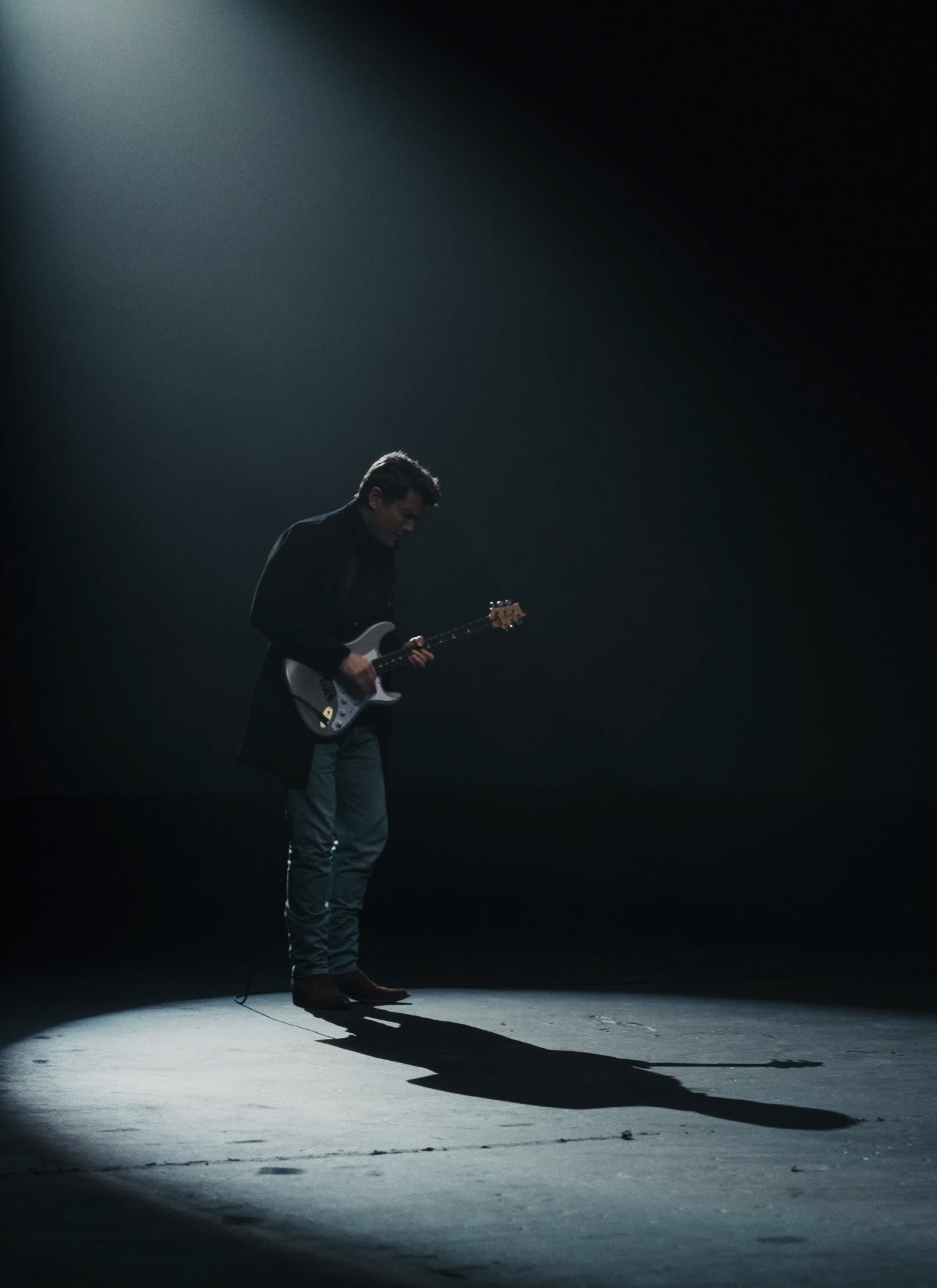
When an artist spends decades refining a voice as personal and unmistakable as John Mayer’s, every detail matters. Touch, phrasing, restraint, and tone become inseparable from the music itself, shaped through years of writing, recording, and performance.
That pursuit has resulted in one of the most extensive and carefully curated collections of guitar equipment in existence. Taken as a whole, John’s gear could live behind glass as a museum exhibit; rare, historically significant, and in many cases impossible to replace. But within that collection exists a far smaller group of pieces; the tools he reaches for instinctively, refined through constant use rather than preservation.
John is also known as a committed purist, not out of nostalgia or resistance to change, but out of a deep respect for the guitar and its history. His approach celebrates the details: circuits, components, feel, and the subtle interactions that give sound its character. Any new tool, digital or otherwise, has to honor that lineage and meet the same standard of care and intent.
John opened the doors to his personal recording studio in Los Angeles and entrusted us with his most prized tools. These are the pieces at the very center of his sound, refined through constant use and chosen from an extraordinary collection. Distilling that world into a single, uncompromising plugin was one of the most demanding and rewarding collaborations we have ever undertaken.
With sincere thanks to John for his trust and vision, it is with great pride that we present to you Archetype: John Mayer X.
Amps

Smooth Operator
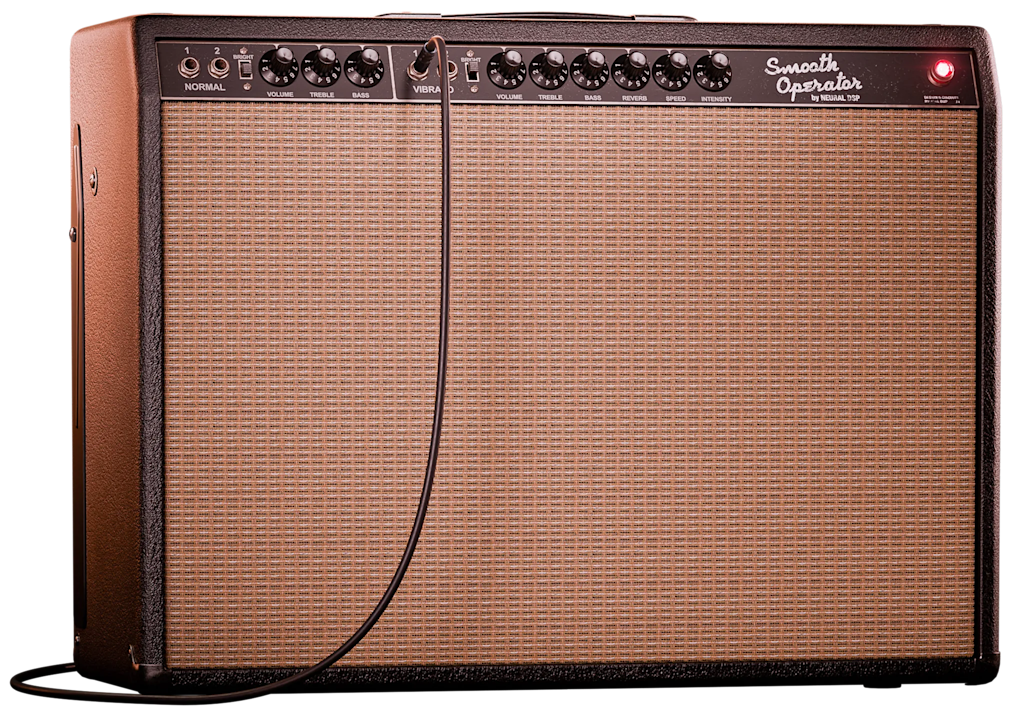
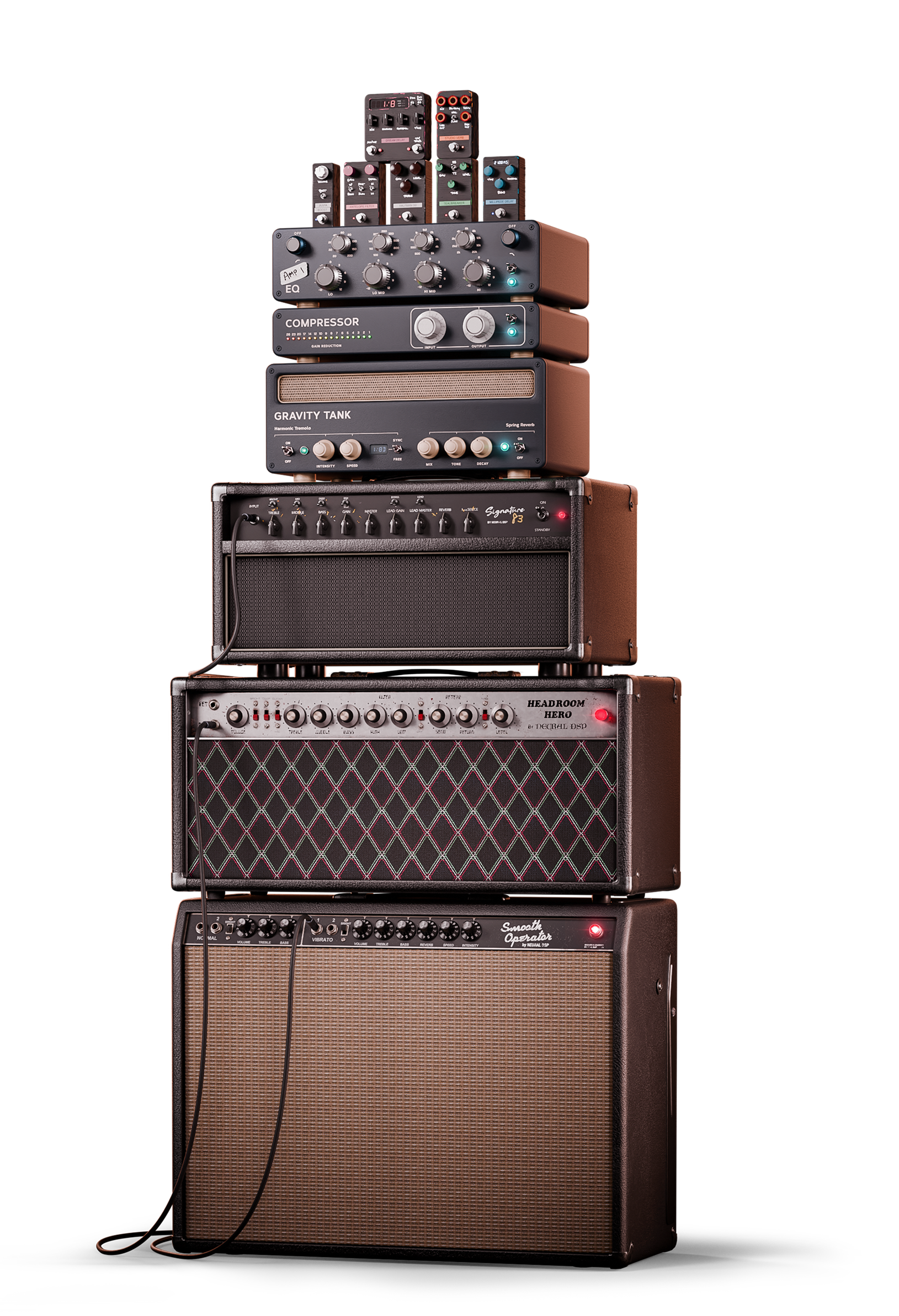
The Smooth Operator forms the foundation of John’s classic clean tone and is closely associated with the sound of vintage American blues recordings. It is defined by a wide, authoritative low end and an open, room-filling presence that gives his tone scale and weight.
Much of that character comes from its 15-inch speaker, which delivers a firm, piano-like bass response that smaller speakers simply can’t replicate. At higher volumes, the amp begins to compress and growl naturally, producing a familiar, musical breakup. With simple controls and a naturally scooped midrange baked into the circuit, the Smooth Operator offers a direct, unmistakable voice that anchors the entire rig.
Headroom Hero
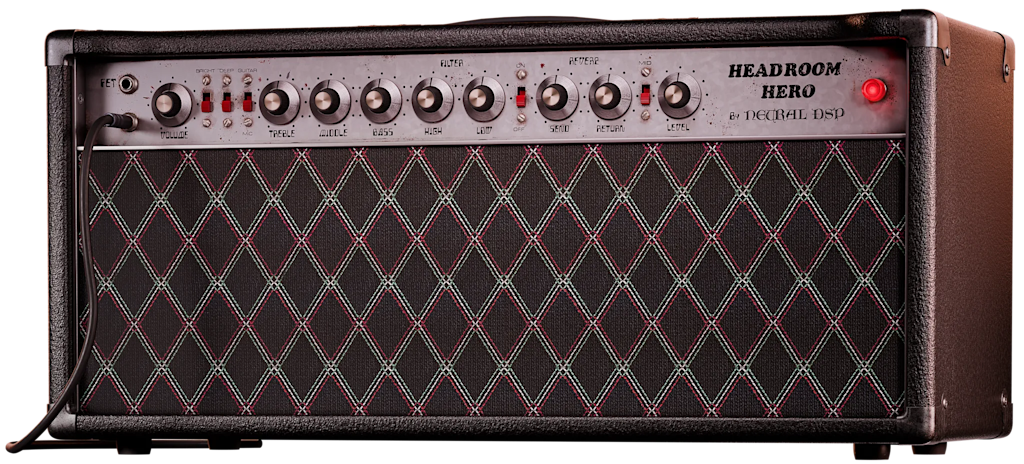
Headroom Hero is defined by immense clean headroom, immediacy, and extraordinary responsiveness. Even at extreme volumes, the tone remains clear, wide, and uncompressed, exposing every nuance of the player’s touch. It is an amplifier whose clean channel refuses to break up, maintaining clarity and authority under conditions that would push most designs into compression or distortion, while an alternate input offers a deliberate path into saturation when required.
This amplifier comes from a lineage where each unit was built as a singular expression, shaped through close collaboration with the player it was made for. Acquired by John during the writing of Continuum, this particular example has become the most coveted amplifier in his collection. In his rig, it serves as the ultimate clean reference: a revealing, uncompromising foundation against which everything else is shaped.
Paired with a high-power open-back cabinet voiced for focus and projection, the system delivers a firm, controlled low end and a vocal midrange that stays articulate even at high volumes. The result is exceptional clarity and headroom without softening attack, allowing the amplifier to remain precise and authoritative no matter how hard it is driven.
Signature 83
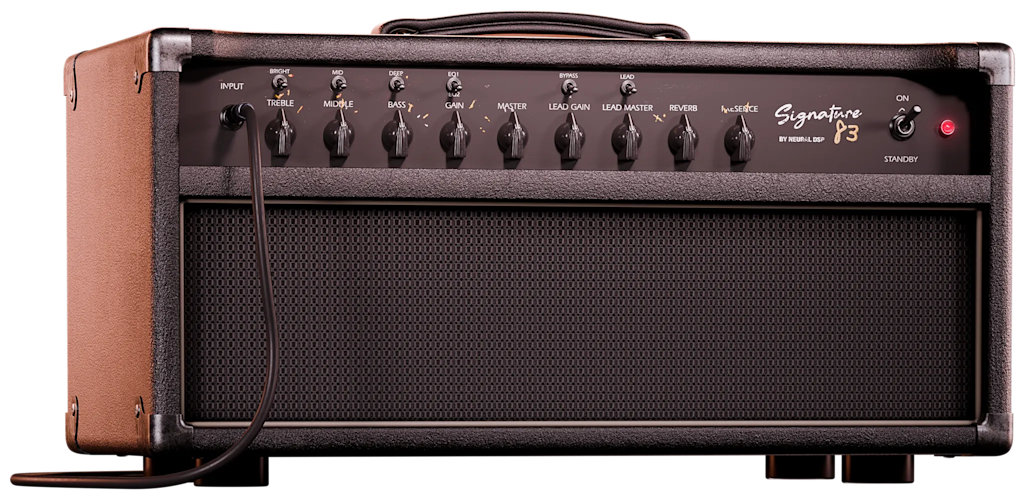
The Signature 83 grew out of John’s long-standing collaboration with a boutique amplifier builder, eventually leading to a limited signature model produced in very small numbers. The amplifier modelled here predates that release: an early prototype built specifically for John, making it a true one-of-one.
Defined by its flexibility and musical range, the Signature 83 occupies the space between the pristine precision of the Headroom Hero and the warmth of the Smooth Operator. It adds clarity, definition, and harmonic richness to the upper range of the rig, delivering articulate cleans with a smooth, creamy midrange that excels for expressive lead playing.
As the amp is pushed into its alternate voicing, the response naturally thickens and becomes more forward, reshaping the gain structure and midrange emphasis while retaining clarity and control. Paired with a focused 1×12 cabinet voiced for balance and articulation, it provides lift, presence, and musical weight exactly where the rig needs it.

Three-in-One Amp
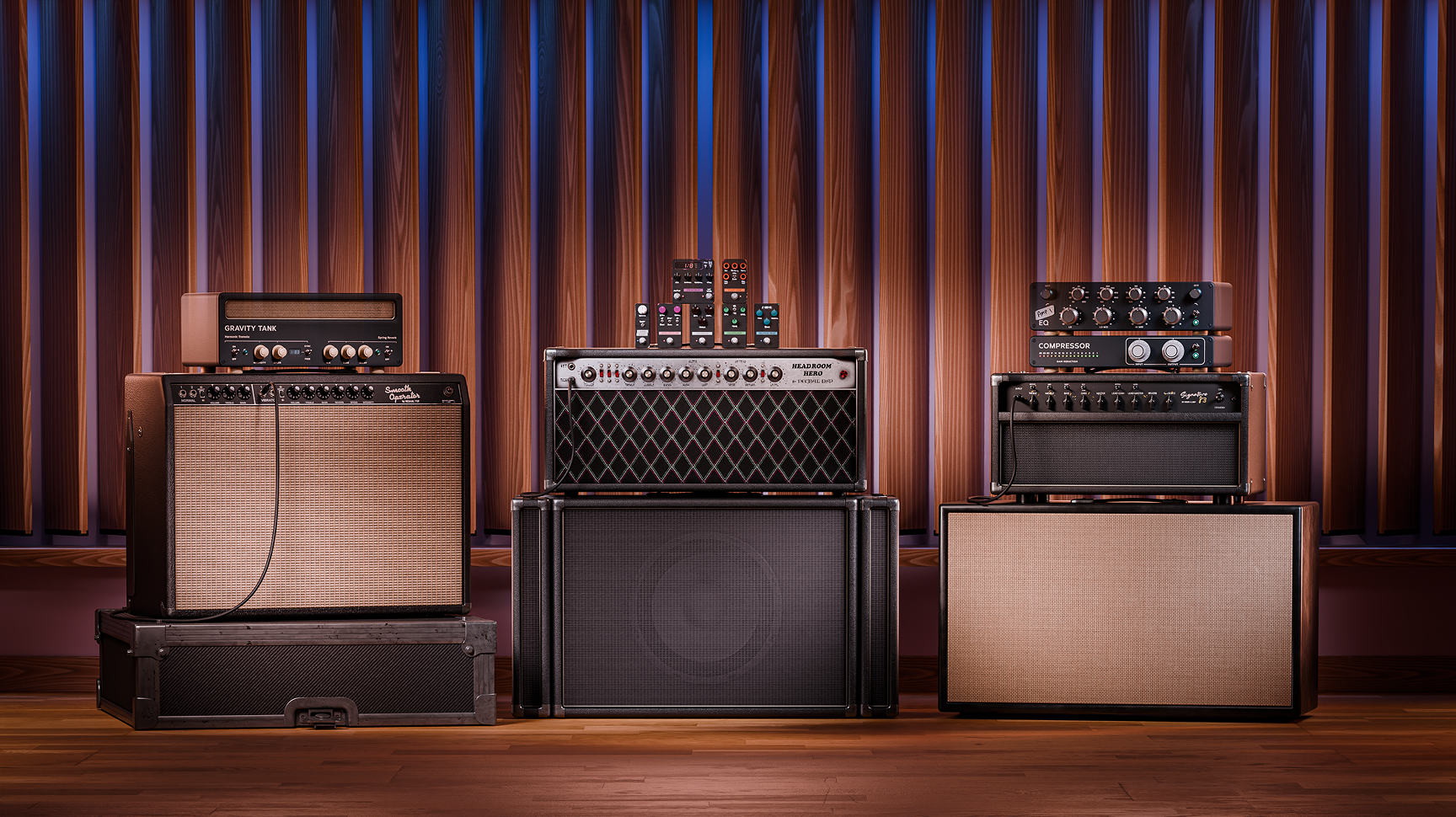
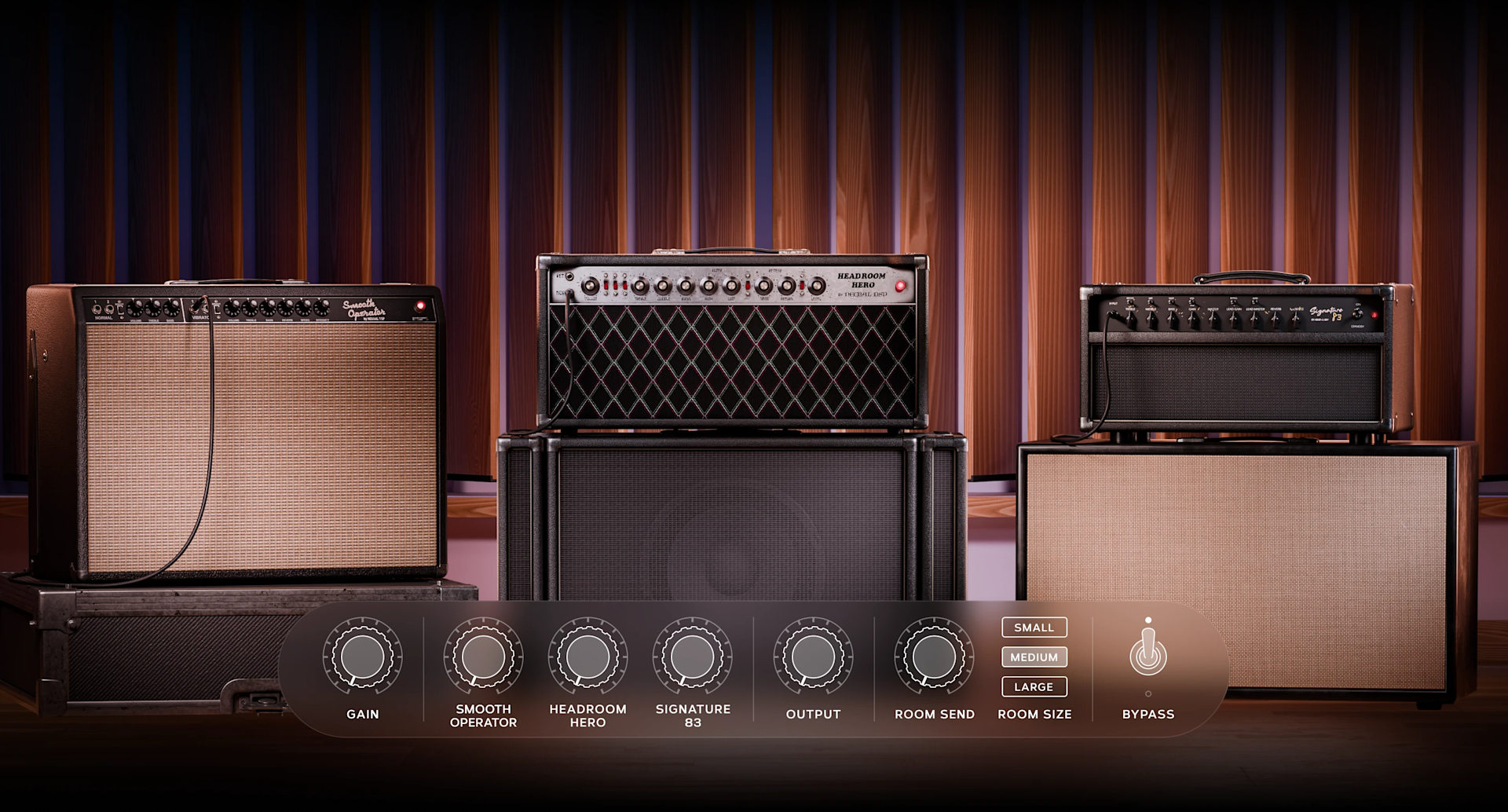
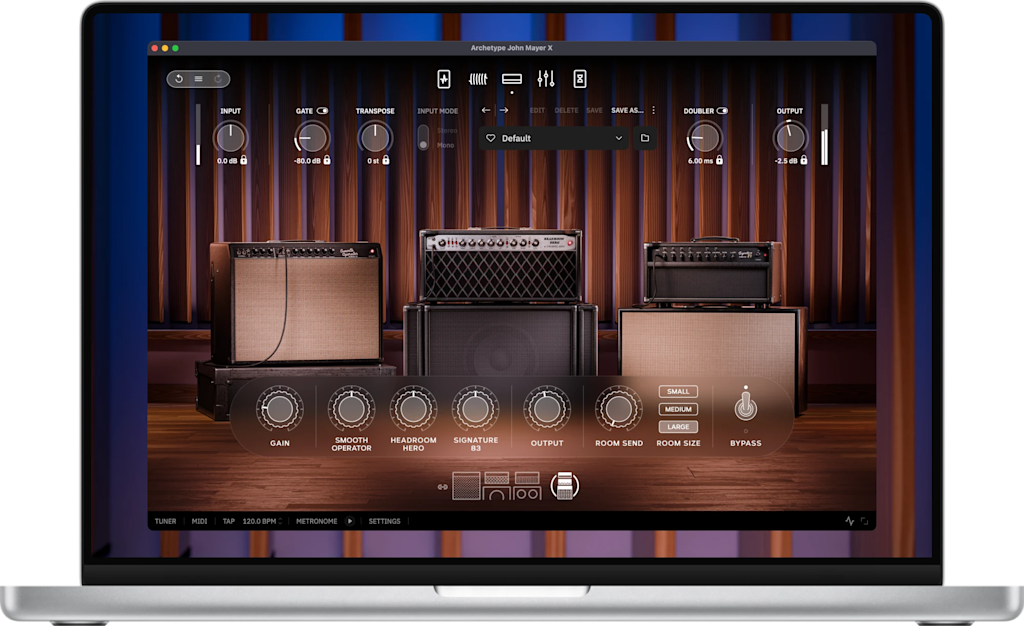
Individually, these amplifiers are unobtainable icons, each with its own history, voice, and feel. Together, they become something else entirely. John’s rig is never built around a single amplifier. Both on stage and in the studio, he blends all three simultaneously, allowing their distinct characters to interact as one cohesive signal chain.
The Three-in-One Amp recreates John’s multi-amplifier setup exactly as he uses it, guided by an obsessive devotion to tone and refined by years of touring and recording. All three amplifiers run at once, routed in parallel; each perfectly matched to John’s exact settings. Cabinets, microphones, and routing follow the same structure as his studio setup, preserving the interaction that makes the system feel complete.
The result isn’t something to dial in; it’s something to step into. The response is immediate, expansive, and deeply connected to touch, revealing the kind of feel that only emerges when multiple amplifiers are working together in balance.
John Mayer’s complete signal chain - three legendary amps combined exactly as he uses them, ready to be played.
Pre effects
Justa Boost
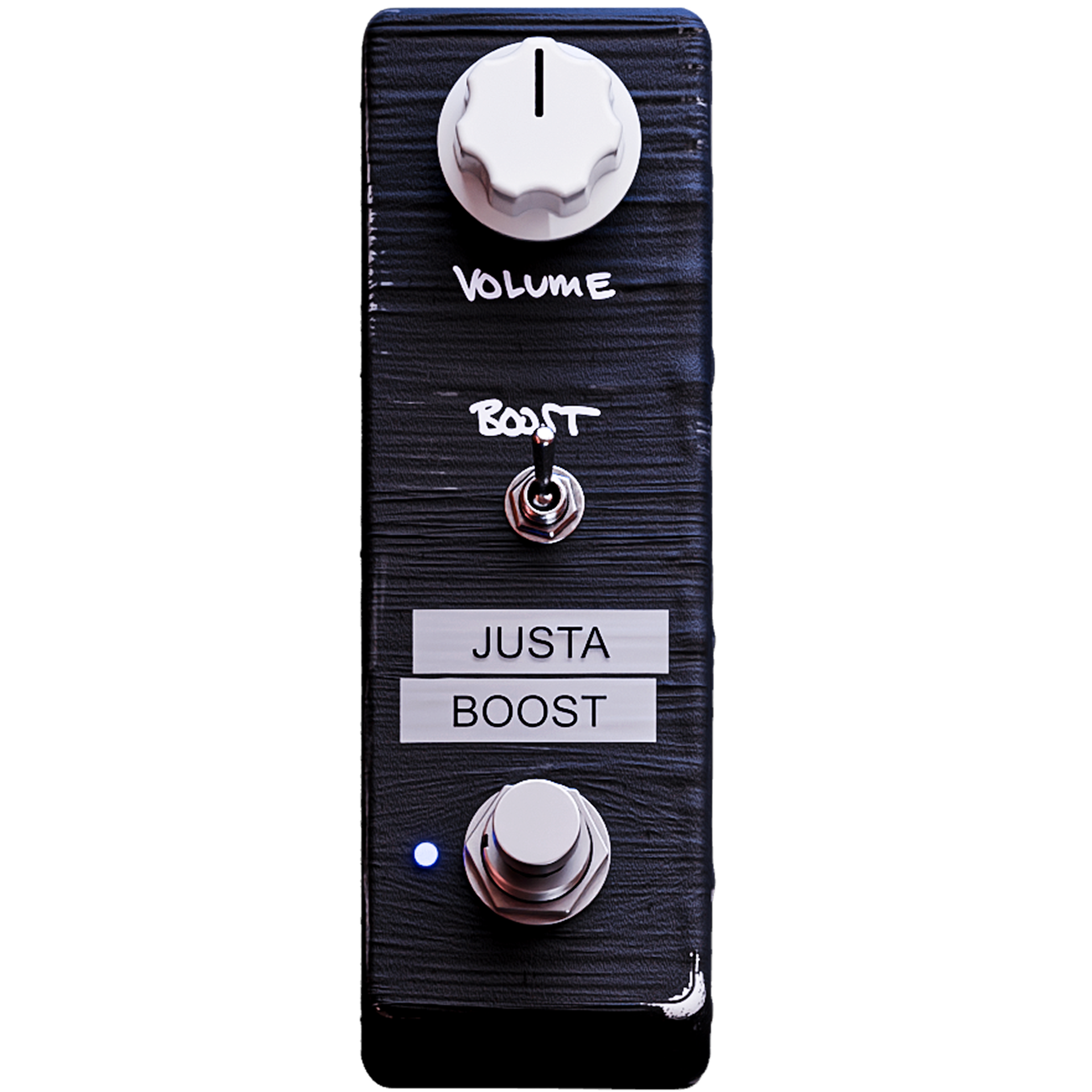
Placed at the very front of John’s signal chain, Justa Boost serves as the foundation of his sound. Rather than pushing the amplifiers into heavy drive, it subtly enhances the natural character of his vintage-voiced single-coil pickups, adding body and presence before the signal ever reaches an amp.
Used as an always-on tone shaper, it encourages the amps to respond more dynamically, allowing them to compress naturally and feel fuller under the fingers. Two modes are available: a pristine clean boost and a slightly driven option for added edge and harmonic density.
Antelope Filter
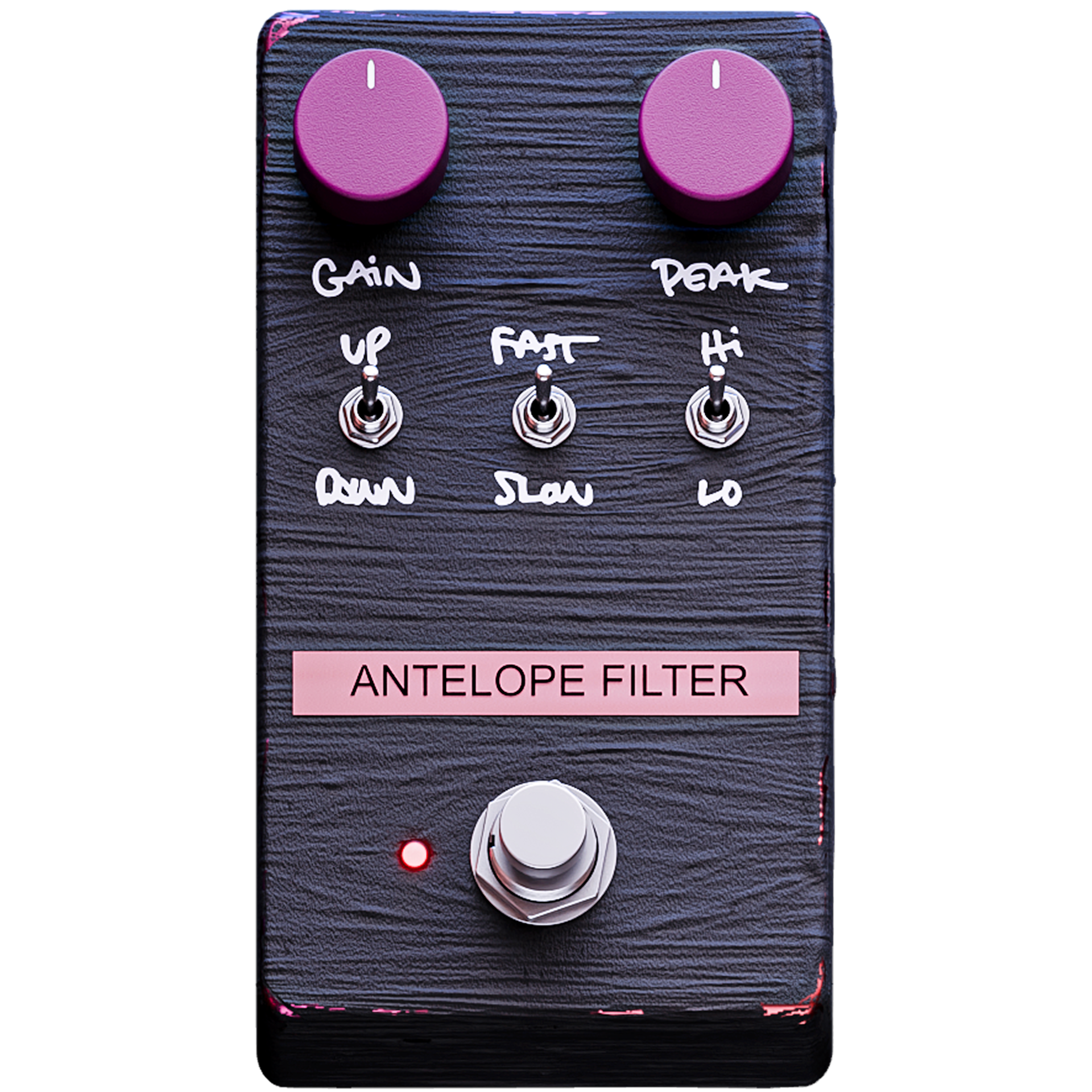
An expressive envelope filter, the Antelope Filter brings movement and texture to clean and lightly driven tones. Heard in the iconic intro and solo of “I Don’t Trust Myself (With Loving You),” it adds color and motion to lead lines, where subtle filtering becomes part of the phrasing.
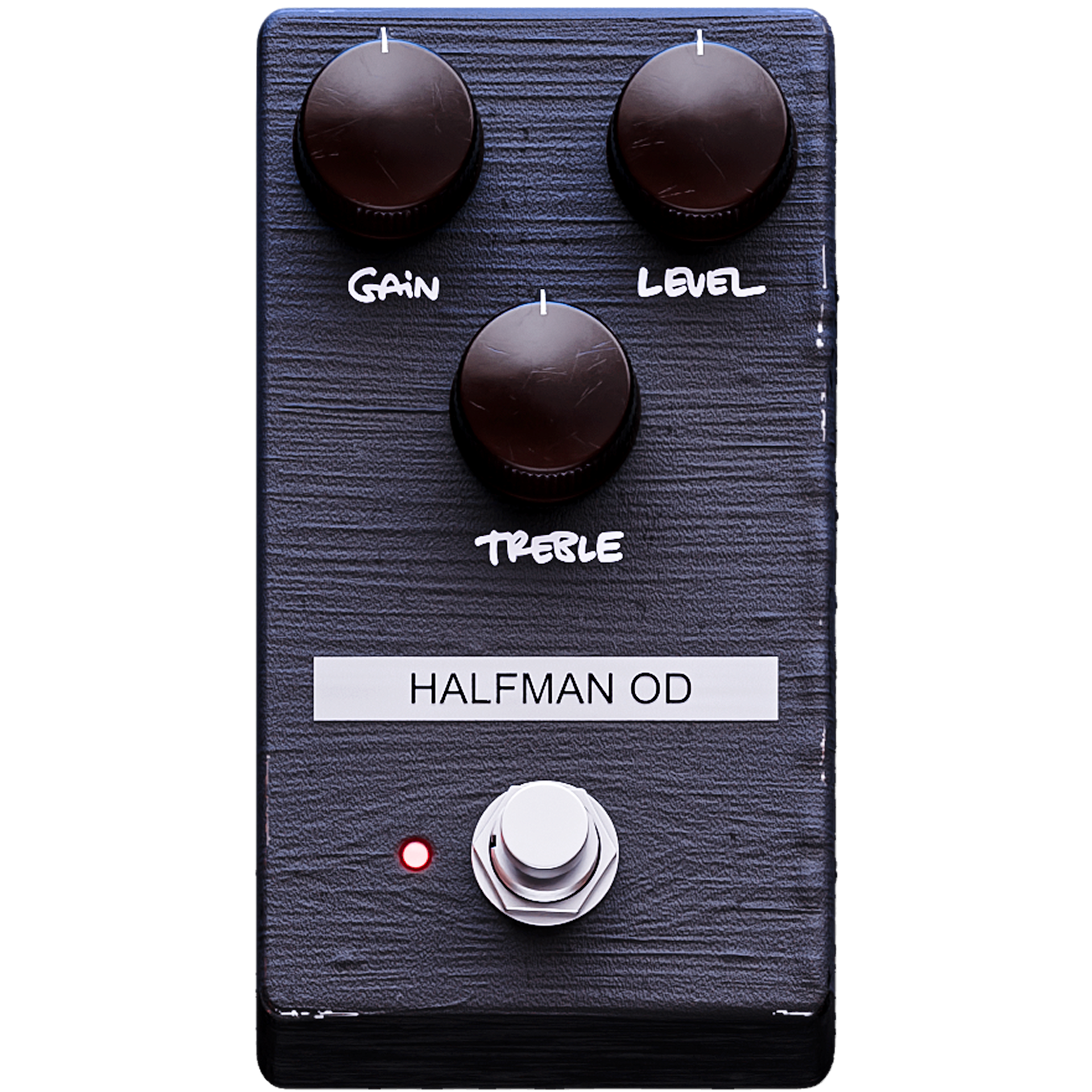
Halfman OD
Halfman OD recreates one of the most sought-after overdrive pedals ever created, a design surrounded by decades of reverence and debate. For John, its role is precise and musical - adding harmonic richness, presence, and sustain while preserving clarity and dynamic response, which is why it has remained a constant on his live pedalboard.
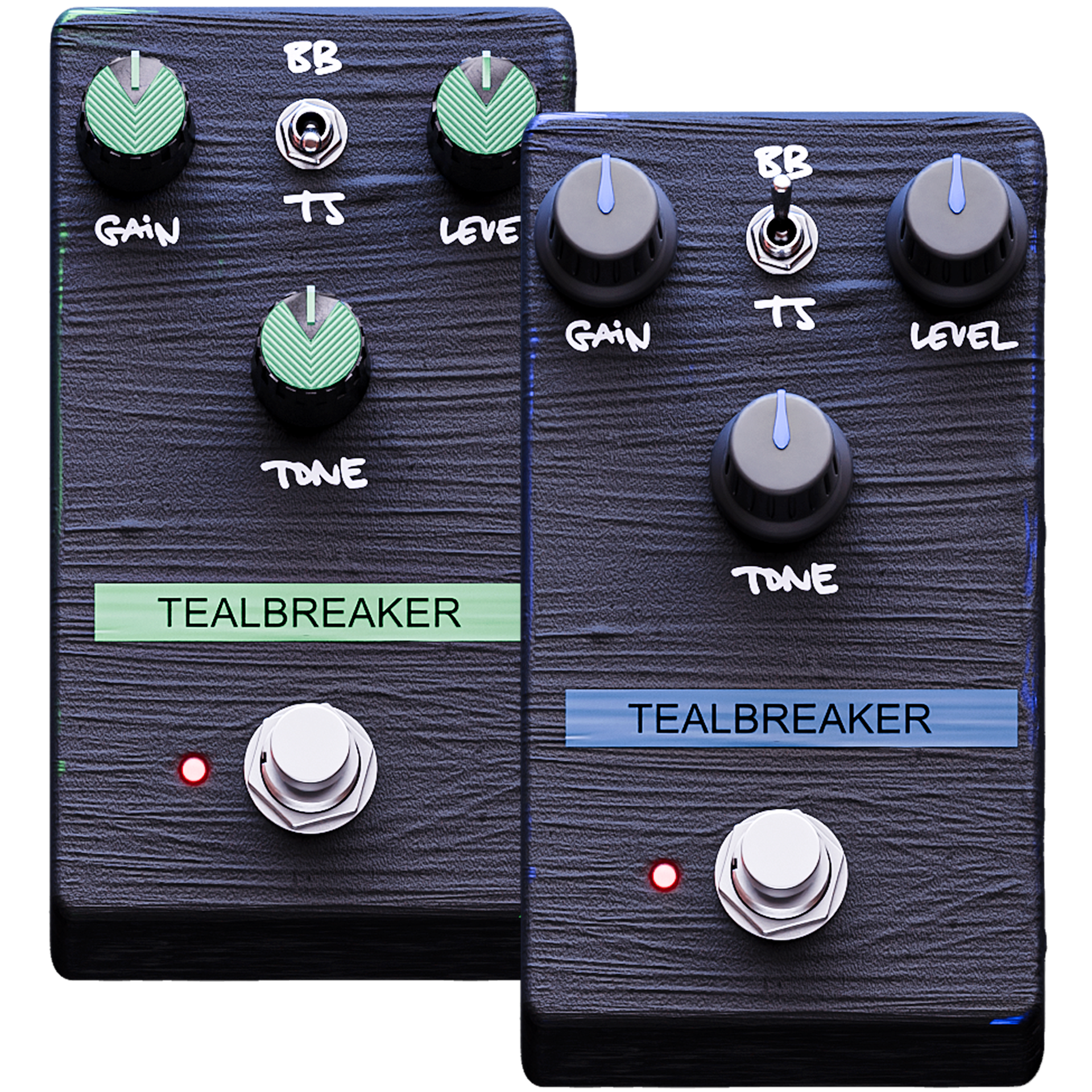
Tealbreaker
Tealbreaker combines two distinct overdrive voices into a single, flexible pedal, each designed to shape gain and midrange in a specific, musical way.
TS Mode delivers a classic mid-focused overdrive that tightens the low end, pushes the midrange forward, and softens the high end as gain increases. It is especially effective for driving clean or edge-of-breakup amps into a singing lead tone, keeping single-note lines focused and present in a mix.
BB Mode offers a lower-gain, more open overdrive that preserves the natural frequency balance of the guitar and amplifier. With less midrange emphasis and a softer clipping character, it adds warmth and sustain while responding naturally to playing dynamics and volume-knob changes. This voice played a key role in many of the guitar tones on Continuum.
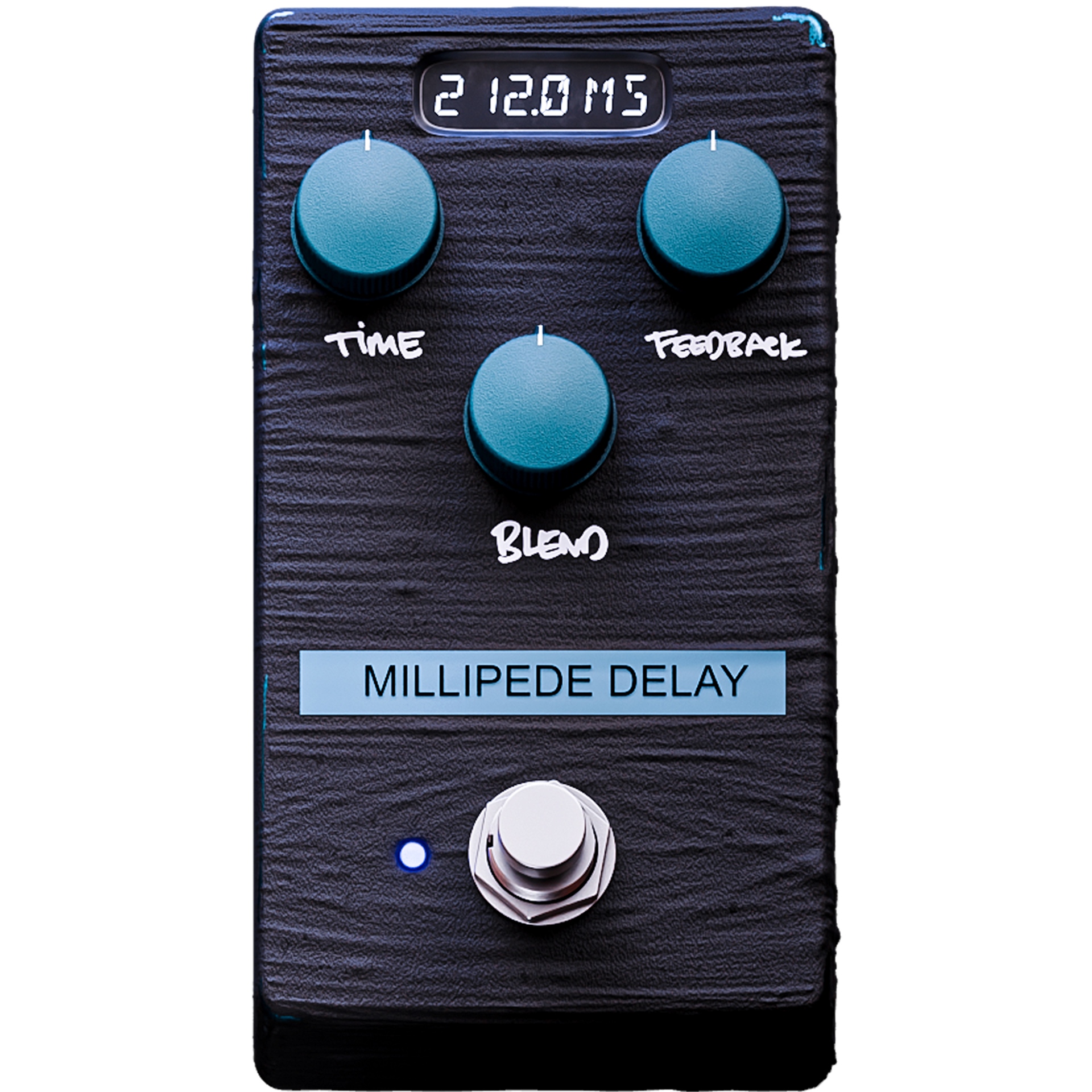
Millipede Delay
Based on a rare analog BBD delay from the late 1990s, Millipede Delay adds a subtle, slightly lo-fi dimension beneath the dry signal. Used at extremely short delay times, it functions as a barely perceptible slapback - often described by John as his “secret weapon” for making a part feel complete.
Gravity Tank
The Gravity Tank is a custom device developed by Neural DSP that brings together two elements at the heart of John’s sound: spring reverb and harmonic tremolo. Combined into a single unit, they create a sense of depth and motion that feels inseparable from the way he phrases and sustains notes.
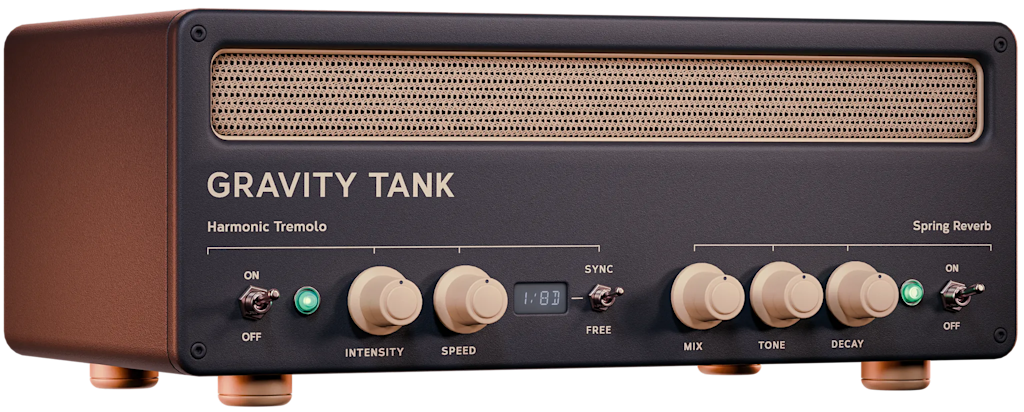
The name is no accident. The interplay between harmonic tremolo and spring reverb forms the foundation of the guitar tone on “Gravity,” where space and movement become part of the performance itself. Gravity Tank captures that relationship as a unified, expressive effect rather than two separate processes.
Spring Reverb
John began using this reverb around 2013, and it remained a constant on his pedalboard across multiple tours. The ’60s Spring mode emulates the two-spring tank reverbs found in vintage amplifiers, delivering a warm, dimensional ambience that sits naturally around the dry signal without overpowering it.
Harmonic Tremolo
Inspired by vintage harmonic tremolo circuits, this all-tube tremolo voicing is something John has relied on for many years. His personal unit has been modified to allow slower tremolo rates, enabling a wider, more gradual movement that adds depth and motion without distraction.
Cabs
The Cabinet section was created in close collaboration with John and his team, with all cabinet impulse responses recorded directly in his personal recording studio in Los Angeles. The cabinets, speakers, microphones, and room are recreated exactly as they are used in his working environment, preserving the real-world relationships that define how his rig translates on record.
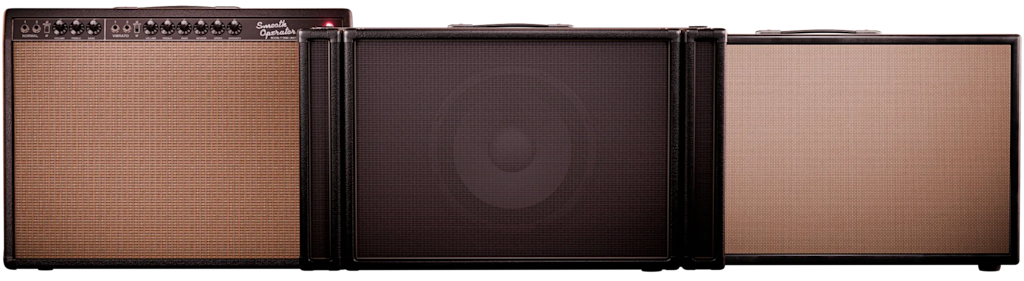
Eleven virtual microphones can be placed freely around each speaker, allowing precise control over tone, position, and perspective. The module can be run in mono or stereo, with independent control over panning and level when using dual microphones.
A dedicated Room Send adds subtle room ambience, introducing depth and space without obscuring detail.
The cabinet section also functions as a standard impulse response loader, allowing you to integrate third-party IRs seamlessly into the signal chain.

The cabs now include selectable room sizes:
Small
Medium
Large
Post effects
Dream Delay
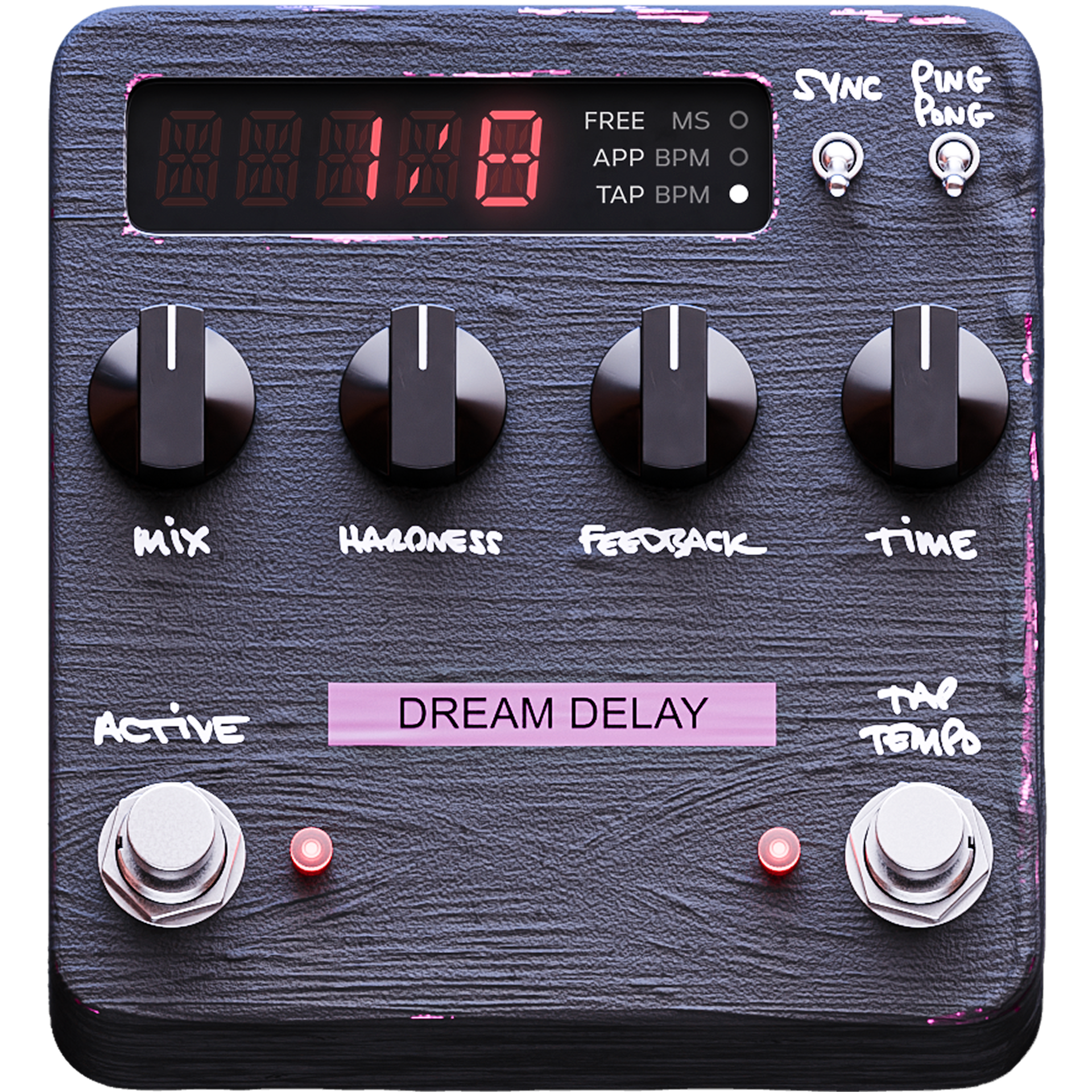
Dream Delay is a precise, musical digital delay inspired by the clarity and depth of classic 1980s rack units. It sits cleanly behind the dry signal, adding space and repetition without softening attack or articulation.
The character of the repeats can be shaped using the Hardness control, which gradually darkens the delay within the feedback path. As the repeats decay, they take on the softened edges and subtle loss of high-end associated with tape degradation, allowing the delay to feel worn-in, organic, and naturally integrated rather than pristine or clinical.
Studio Verb
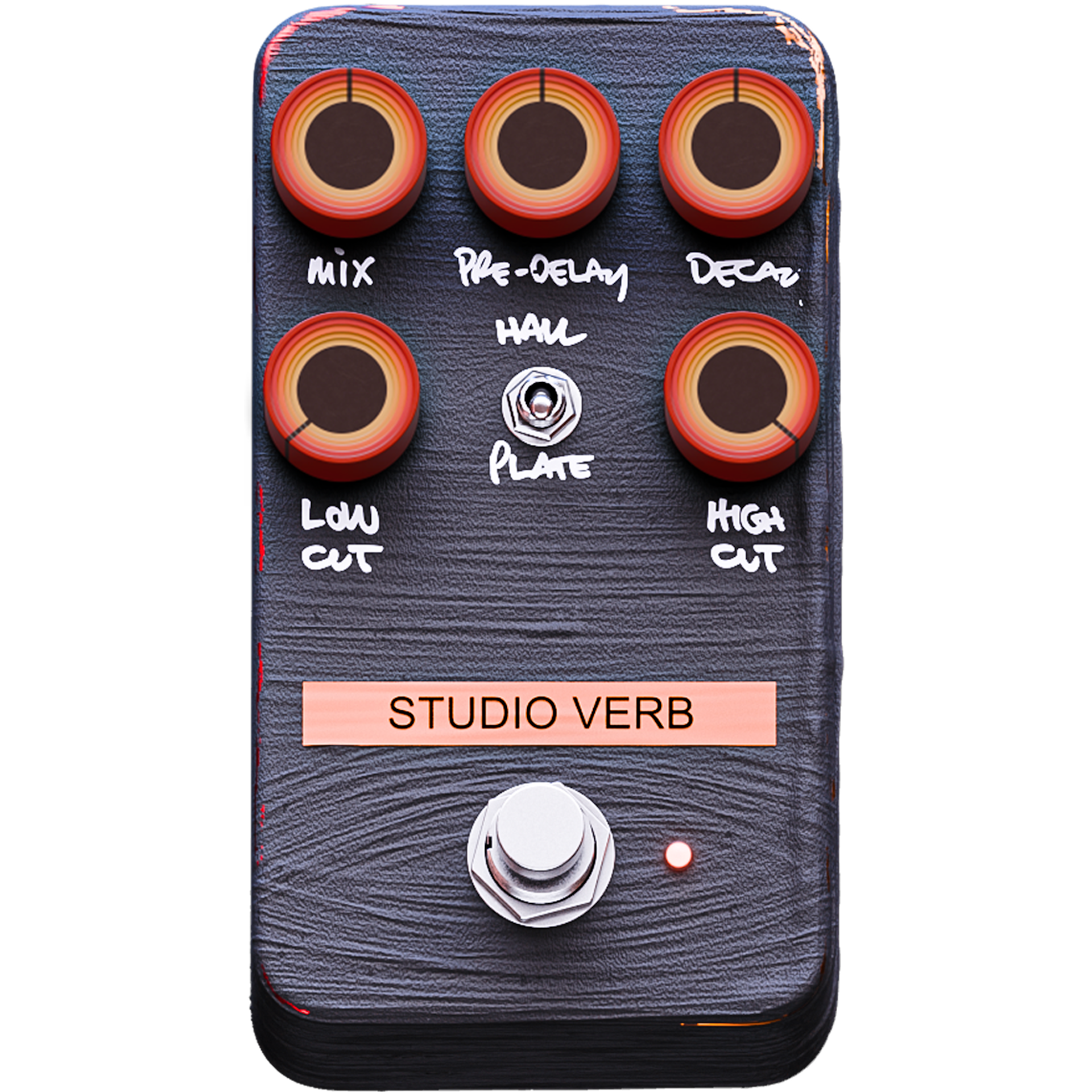
Studio Verb provides two carefully voiced reverb algorithms designed to place the guitar in a finished, studio-ready space, drawing directly from the character of classic digital reverbs.
Concert Hall delivers a lush, musical ambience inspired by early digital reverbs of the 1970s. Its dense, smooth decay and gentle modulation create depth and width without harshness or metallic artifacts. The signal is deliberately downsampled to introduce grain and texture, adding warmth and character that feels lived-in rather than pristine, and allowing the reverb to sit naturally around the guitar.
Plate is inspired by classic digital plate reverbs, prized for their depth, modulation, and unmistakable studio sheen. It adds space without overpowering the source, with smooth movement and a controlled shimmer that enhances sustain and dimension. Silky highs and a dense, even tail give the reverb a polished, immersive quality closely associated with 1980s studio productions.
EQ and compressor
4-band semi-parametric equalizer
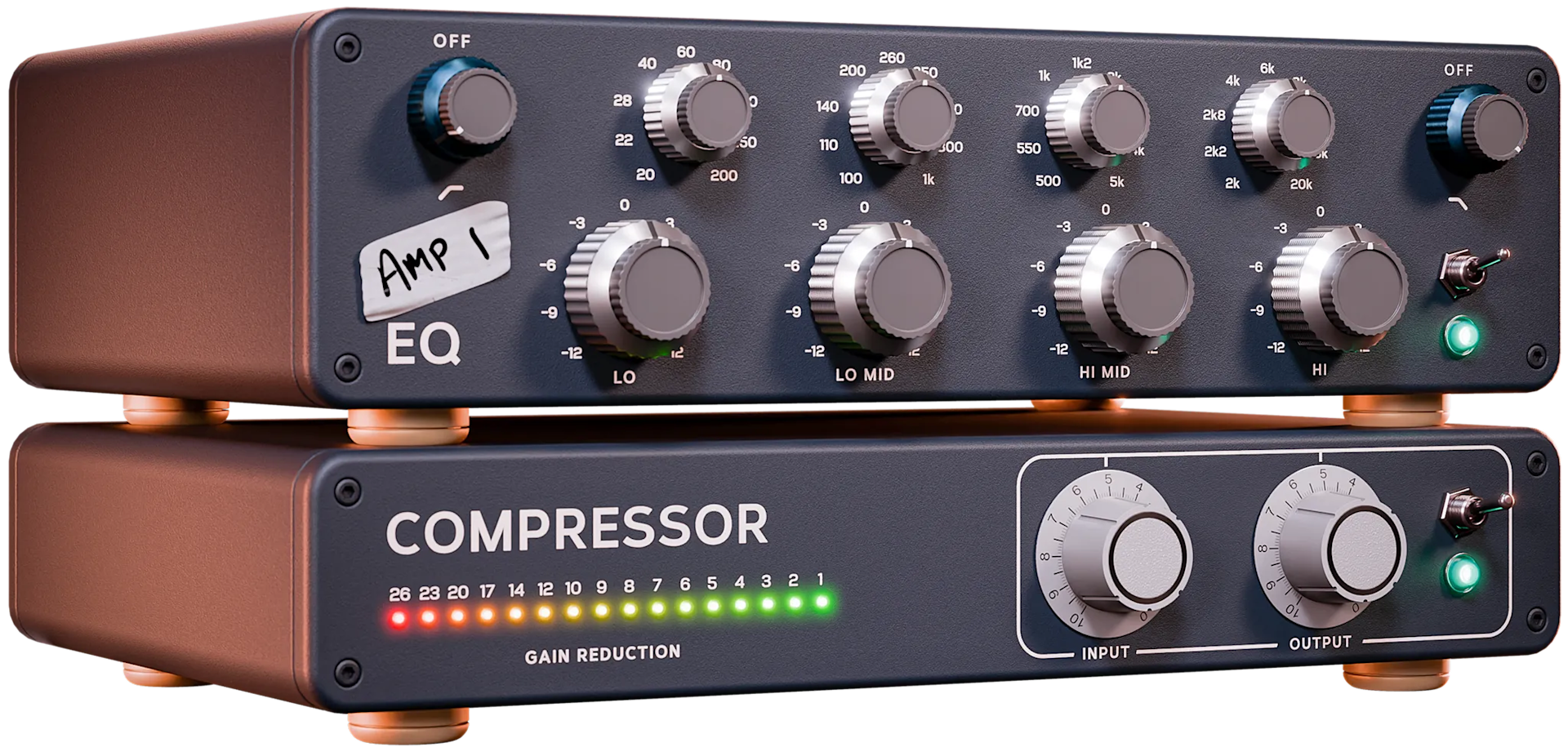
A flexible four-band semi-parametric equalizer with high-pass and low-pass filters, designed for subtle shaping rather than dramatic correction. It is especially useful for refining the low end of the amplifiers, which are naturally full and wide, allowing you to create space and focus without altering their core character.
Compressor
Modeled after one of John’s preferred tools for recording guitar, the studio compressor is used to control the natural peaks produced by his dynamic amplifiers while preserving clarity, articulation, and touch.
The compressor is set to John’s exact specifications, with its response tuned to his preferred settings. This places it naturally within the signal chain, providing control and consistency without altering the character of the performance and maximizing the feel of the entire signal chain. Adjust the amount and output level as needed, and let the compression do its work quietly in the background.
Global features

Global Lock
Keep input, gate, transpose, doubler, and output settings consistent while browsing presets, so core controls remain exactly where you want them.

Transpose
Pitch your guitar up or down by a constant interval (+12/-12 semitones) to quickly change tunings without retuning your instrument.

Doubler
Creates a subtle stereo spread inspired by double-tracked recordings, adding width and dimension without obscuring the original performance.

Tuner
An integrated live tuner is displayed at the bottom of the interface for quick, unobtrusive reference.

Metronome
Supplements your practice with controls for time signature, accent sounds, and note values (available only in Standalone mode).

16:10 aspect ratio
A new 16:10 layout optimized for modern displays, designed to reflect John’s studio environment while keeping the signal chain clear and intuitive.

Presets
Featuring 18 presets from John Mayer himself and 300+ curated presets from artists such as Cory Wong, Blues Saraceno, James Valentine, Kenny Beats, Zakk Cervini, and more.

Preset Explorer
All preset folders are organized in the left panel, with quick access to recent presets. Use the search bar to find exactly what you need, add tags for easier organization, and mark your go-to sounds as favorites.

Tooltips
Hover over a parameter to see helpful tooltips displayed in the bottom utility bar.

Undo/Redo
Archetype: John Mayer X now includes Undo and Redo functionality with an edit history, making it easier to experiment with settings and quickly reverse changes.
Standalone
No DAW? No problem! Run Archetype: John Mayer X as a standalone app with no additional software required.
Getting started with guitar plugins

Guitar plugins are software versions of amps, cabinets, and effects that run on your computer. Instead of using physical gear, you plug your guitar into your computer through an audio interface and get professional tones instantly. Much of modern music is recorded using guitar plugins.
Archetype: John Mayer X works both as a standalone app and inside recording software (a DAW).

Download a 14-day free trial of Archetype: John Mayer X
For more information, read our guide on downloading, installing, and activating plugins.

Connect your guitar to your computer through an audio interface
If you don’t have an audio interface, read our guide on choosing an audio interface for guitar and connecting a guitar to a computer.

Launch the plugin and start playing
Open the standalone app to just play, or load it inside a supported DAW to record. Make sure your audio settings are set up correctly.
System requirements

Archetype: John Mayer X comes in 64-bit VST2 / VST3 / AU / AAX / Standalone.
Latest OS Compatibility for Windows & Mac, including Native Apple Silicon.
For more information about system requirements visit our support page.
Free iLok License Manager and iLok account needed.
New to guitar plugins? Start here!
Our getting started guides will help you learn everything you need to know about using plugins.
Getting started with plugins